* Product features High efficiency and low loss Low magnetic leakage and low electromagnetic interference Extremely low operating noise and vibration Excellent electrical performance Compact structure and high power density:
* Typical application fields
*Mounting Methods 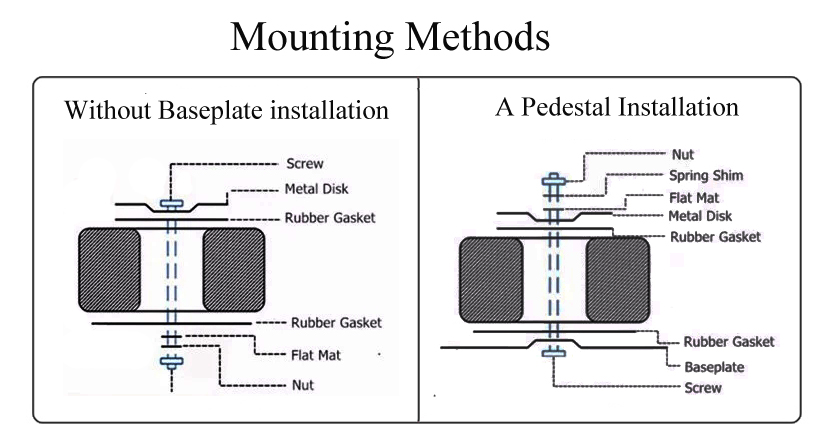
* Dimensions and specifications 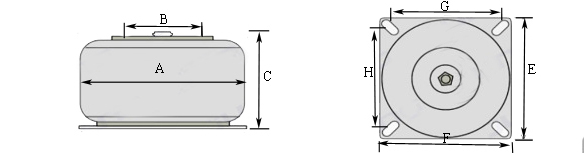 Part Number | Power(VA) | Size
Diameter*Height (A*C) | Note | ST - 30W | 30VA | 82*39 |
| ST - 50W | 50VA | 85*40 |
| ST - 80W | 80VA | 95*55 |
| ST - 100W | 100VA | 100*55 |
| ST - 120W | 120VA | 105*56 |
| ST - 150W | 150VA | 112*55 |
| ST - 200W | 200VA | 115*60 |
| ST - 250W | 250VA | 115*65 |
| ST - 300W | 300VA | 115*70 |
| ST - 350W | 350VA | 123*70 |
| ST - 400W | 400VA | 125*75 |
| ST - 500W | 500VA | 135*75 |
| ST - 600W | 600VA | 135*80 |
| ST - 700W | 700VA | 146*75 |
| ST - 800W | 800VA | 148*75 |
| ST - 1000W | 1000VA | 150*75 |
| ST - 1500W | 1500VA | 160*90 |
| ST - 2000W | 2000VA | 180*85 |
| ST - 3000W | 300VA | 185*110 |
| ST - 4000W | 4000VA | 190*130 |
| ST - 5000W | 5000VA | 235*130 |
|
Toroidal Transformers: Critical High-Performance Components in Electronics and Equipment Toroidal transformers are a vital category of transformers in electronics and equipment, renowned for their exceptional performance. I. Structure and Operating Principle
Core Structure: The core is formed by winding a high-permeability silicon steel strip (or alloy strip) into a closed loop (O-shape). This continuous winding process creates a fully closed magnetic circuit with no air gaps.
Windings: The primary and secondary coils are wound directly and evenly around the toroidal iron core. This is typically done using a specialized winding machine.
Operating Principle: Like all transformers, it operates on the principle of electromagnetic induction. Alternating current in the primary winding generates an alternating, closed magnetic flux within the toroidal core. This flux is almost entirely confined within the core, efficiently coupling to the secondary winding to induce voltage.
II. Core Performance Advantages (Why It Is Highly Praised) These advantages stem primarily from its closed magnetic circuit and symmetrical structure:
High Efficiency (Typically >95%):
The closed magnetic circuit results in extremely low magnetic reluctance and a very small magnetizing current (no-load current), often only 20%-50% that of conventional E-I core transformers.
The core material is of high quality and continuous, leading to low eddy current and hysteresis losses.
This makes toroidal transformers highly efficient under both no-load and load conditions, offering excellent energy savings.
Low Electromagnetic Interference (EMI) and Low Magnetic Leakage:
Because the magnetic field is tightly confined within the toroidal core, stray magnetic flux (magnetic leakage) radiating into external space is minimal.
This is crucial for preventing interference with nearby sensitive circuits (e.g., in audio equipment, precision instruments) and makes it easier to pass Electromagnetic Compatibility (EMC) tests.
Excellent Electrical Performance:
High Voltage Regulation: Due to tight coupling and low leakage inductance, output voltage remains more stable under load variations.
Good Transient Response: Capable of responding more quickly to rapid load changes.
Low Operating Temperature: High efficiency means low energy loss, resulting in lower temperature rise and longer lifespan.
Low Vibration and Low Noise (Commonly <20dB):
The core is continuously wound and tightly compacted, lacking the seams found in laminated cores.
There is virtually no "hum" caused by magnetostriction, making it the standard choice for high-fidelity audio equipment and suitable for medical/laboratory equipment requiring quiet environments.
Compact Size and Light Weight:
For the same power rating, toroidal transformers are more material- and space-efficient than E-I or R-core transformers, offering high power density. This is thanks to their high efficiency and optimal material utilization.
III. Key Considerations
More Complex Manufacturing Process:
Weaker Resistance to DC Magnetization:
Due to the highly symmetrical magnetic circuit and sharp saturation point, even a small DC component in the primary winding (e.g., from rectifier circuit imbalance or amplifier bias current) can easily cause unidirectional core saturation.
Saturation leads to a sharp increase in magnetizing current, potentially causing the transformer to overheat or burn out. Therefore, preventive measures are necessary in circuits where DC components might be present.
High Inrush Current at Power-On:
Because the no-load current is very low, closing the circuit at the AC zero-crossing point can generate an instantaneous inrush current up to tens of times the rated current. This must be considered in circuit design (e.g., using soft-start circuits or NTC thermistors).
Mounting and Fixing:
IV. Analysis of Key Performance Indicators
Rated Power (VA): The apparent power capacity for continuous operation at specified temperature and frequency. The actual output capability of toroidal transformers typically aligns closely with the rated value.
No-Load Current: A key indicator of core quality and efficiency. The lower, the better. High-quality "toroids" can achieve as low as 2%-5% of the rated current.
No-Load Loss (Core Loss): Total losses (primarily iron loss) when the transformer is unloaded. Directly reflects efficiency and heat generation.
Load Loss (Copper Loss): Resistive loss in the windings at rated load. Related to winding material and manufacturing process.
Voltage Regulation: The percentage change in voltage from no-load to full-load. Toroidal transformers typically perform excellently (can be <5%).
Insulation Class: The thermal endurance rating of the winding insulation material (e.g., Class A, E, B, F, H), which determines the maximum allowable operating temperature.
Characteristics of Toroidal Transformers: High Efficiency and Low Loss:
Extremely low no-load current: The closed magnetic circuit results in very low magnetic reluctance, requiring minimal magnetizing energy.
Low core loss: High-quality silicon steel strips are continuously wound, minimizing eddy current and hysteresis losses.
Result: Overall efficiency typically exceeds 95%, ensuring energy savings and low temperature rise.
Low Magnetic Leakage and Low Electromagnetic Interference:
The magnetic field is tightly confined within the core, with minimal stray magnetic radiation to the surroundings.
Key advantage: Causes minimal interference to nearby circuits (especially audio and precision instruments) and offers excellent electromagnetic compatibility.
Extremely Low Operational Noise and Vibration:
The seamless and densely compacted core virtually eliminates the "humming" sound caused by magnetostriction.
Signature feature: Makes toroidal transformers the standard for high-fidelity audio equipment and ideal for applications requiring quiet environments.
Excellent Electrical Performance:
High voltage stability: Tight coupling and low leakage inductance result in superior load regulation (minimal output voltage variation with load changes).
Fast transient response: Capable of effectively handling rapid changes in audio signals or load conditions.
Compact Structure and High Power Density:
Application Areas of Toroidal Transformers 1. Audio-Visual and Consumer Electronics (The Most Iconic Application) 2. Industrial Automation and Control
Industrial Control Systems and PLCs (Programmable Logic Controllers)
Servo Drives and Motion Control Systems
Testing and Measurement Instruments
Used in precision instruments such as oscilloscopes, spectrum analyzers, and signal generators, where low interference ensures measurement accuracy.
Machine Tools and CNC Equipment
3. Information Technology and Communications
High-Performance Computers and Servers
Network Communication Equipment
Uninterruptible Power Supplies and Voltage Stabilizers
4. Medical Equipment and Laboratory Devices (Requiring High Safety and Stability)
Medical Imaging Equipment
Life Monitoring and Diagnostic Equipment
ECG machines, ultrasound devices, blood analyzers, etc., require exceptionally clean power to ensure signal accuracy and patient safety.
Precision Laboratory Instruments
Electron microscopes, spectrometers, centrifuges, etc., impose stringent requirements on power stability and low noise.
5. New Energy and Specialized Lighting 6. Transportation and High-End Equipment |


